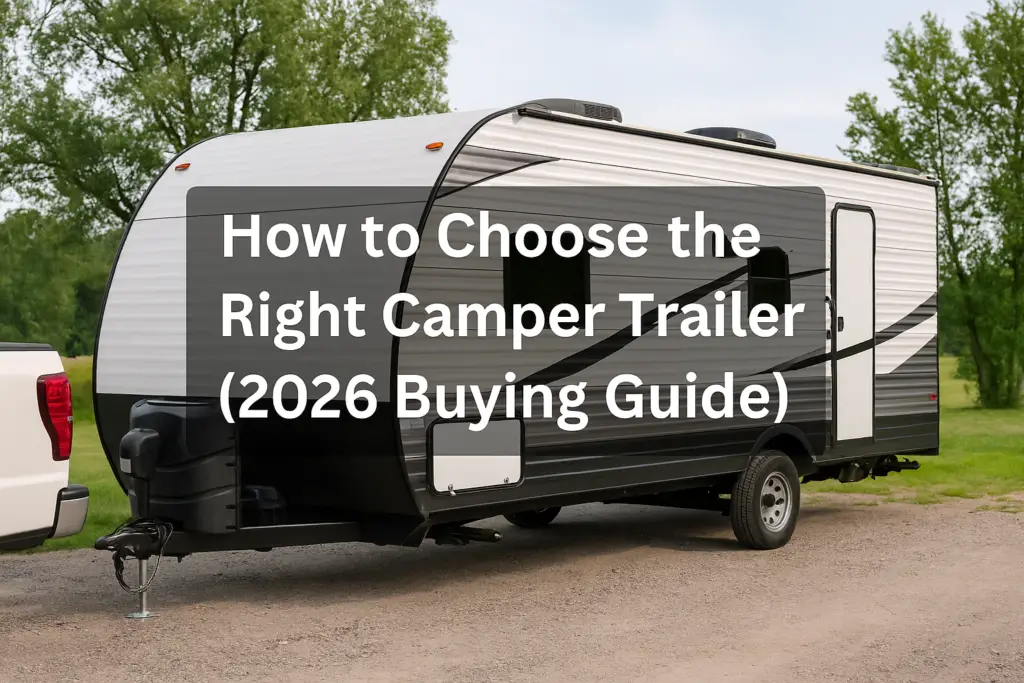
Choosing a camper trailer is one of the biggest decisions you’ll make as a traveler. The right trailer gives you comfort, safety, and freedom. The wrong trailer becomes a stressful, expensive mistake.
This guide will walk you through everything you must know before buying: weight limits, trailer types, must-have features, pricing, off-grid capabilities, and the most common beginner mistakes.
To make things even easier, here’s a helpful video you can watch alongside this guide:
What Makes a Camper Trailer “Right” for You?
The right camper trailer matches your tow vehicle’s towing capacity, fits your travel style (weekend trips vs long-term travel), includes the features you actually use (kitchen, bathroom, off-grid power), and stays within your budget for both purchase and ongoing maintenance. The most important factor is always weight: your trailer must not exceed your vehicle’s safe limits.
Read More: 25 Packing Hacks For Traveling.
Step 1: Start With Your Tow Vehicle
Many beginners make this mistake: they fall in love with a trailer first and then discover their SUV or truck can’t safely tow it.
The Key Numbers to Check
- Towing capacity (GTWR): The maximum weight your vehicle can pull.
- Payload capacity: Passengers + luggage + tongue weight.
- Tongue weight limit: Maximum downward force on the hitch.
- Gross combined weight rating (GCWR): Max total weight of vehicle plus trailer.
If you ignore these numbers, you risk overheating your transmission, overloading your brakes, and losing control when braking or cornering.
Safe rule: Aim to stay at about 70–80% of your maximum tow rating. That gives you a comfortable safety margin.
Step 2: Choose the Trailer Type That Fits Your Lifestyle
Different trailers fit different styles of travel. Instead of asking “Which one is best?”, ask “Which one is best for how I travel?”
Teardrop Trailers
Compact, aerodynamic, and easy to tow.
Best for:
- Solo travelers or couples
- Short weekend trips
- Small tow vehicles
Pros:
- Lightweight and fuel-efficient
- Simple to maintain
- Quick setup
Cons:
- Usually no bathroom
- Limited interior space
Pop-Up Campers
Fold down for towing, expand at the campsite.
Best for:
- Families who want extra sleeping space
- People with limited storage height at home
Pros:
- Light to tow
- Big interior space when opened
- Often cheaper than hard-sided trailers
Cons:
- Canvas walls mean less insulation
- Setup and takedown time in bad weather
Travel Trailers
The most popular style, with a huge range of sizes and floor plans.
Best for:
- Families
- Longer trips
- Full-time or seasonal camping
Pros:
- Indoor bathroom and kitchen
- Solid walls and insulation
- Many layouts to choose from
Cons:
- Heavier than teardrops or pop-ups
- Needs a stronger tow vehicle
Hybrid Trailers
A mix of hard walls and fold-out canvas beds.
Good if you want:
- More sleeping space without a huge weight increase
- A “tent-like” feeling with more comfort
Off-Road and Off-Grid Trailers
Built for rougher terrain and remote camping.
Look for:
- Higher ground clearance
- Stronger frame and suspension
- Larger water tanks
- Solar and battery systems
These are ideal if you like boondocking and exploring forest roads instead of full-hookup campgrounds.
Step 3: Decide Your Must-Have Features
Your trailer doesn’t need everything, but certain features make a big difference in comfort.
Bathroom Options
Ask yourself how important a bathroom is for your trips.
- Full wet bath (shower + toilet)
- Dry bath (separate shower and toilet)
- Cassette or portable toilet
- No bathroom (you’ll rely on campground facilities)
For families, a bathroom usually goes from “nice-to-have” to “must-have.”
Kitchen Layout
- Full indoor kitchen
- Small galley plus outdoor cooking
- Outdoor slide-out kitchen
- Size of fridge and pantry space
If you love cooking, prioritize counter space and a decent-sized fridge. If you mainly grill outside, you may not need a huge indoor kitchen.
Sleeping Arrangements
Consider:
- Fixed queen bed (no daily setup)
- Murphy bed (folds up to make more daytime space)
- Bunk beds (for kids or guests)
- Convertible dinette or sofa bed
Think about how often you’re willing to make and unmake beds.
Interior Layout and Flow
Walk through the trailer and imagine a real day:
- Can two people move around easily?
- Can someone cook while another person uses the bathroom?
- Is there somewhere to sit on a rainy day?
- Do you have space for kids or pets?
If it feels cramped in the dealership, it will feel even smaller on a stormy weekend.
Off-Grid Features
If you like free camping or remote spots, look for:
- Solar-ready roof or factory solar
- Larger fresh and grey water tanks
- Good insulation and double-pane windows
- Battery space for lithium upgrades
Read More: The Future of Off-Grid Camping: How to Set Up Your RV for Self-Sufficiency
Step 4: Understand What Camper Trailers Really Cost
The sticker price is only part of the story.
Typical Price Ranges (2025)
- Teardrop trailers: roughly $8,000–$25,000
- Pop-up campers: roughly $10,000–$18,000
- Small travel trailers: roughly $20,000–$35,000
- Mid-size travel trailers: roughly $35,000–$55,000
- Off-road trailers: roughly $25,000–$60,000+
Hidden Costs Beginners Often Forget
- Weight distribution hitch and sway control: $500–$1,200
- Registration and taxes
- Insurance
- Storage (if you can’t keep it at home)
- Upgrades: solar, batteries, mattresses, accessories
Read More: My 30+ Must Have Best RV Gadgets in 2020
Step 5: Inspect Before You Buy (New or Used)
Even a new trailer should be inspected carefully.
Exterior and Frame
- Check for rust, dents, and damage
- Look under the trailer for bent or damaged components
- Check the coupler, safety chains, and jack
Roof and Seals
- Look for soft spots
- Check all sealant around edges and roof penetrations
- Inspect for discoloration or signs of previous leaks
Interior and Smells
- Look for soft floor areas
- Check around windows, in corners, and near the bathroom for water damage
- Smell for mold or strong chemical cover-up scents
Electrical and Plumbing
- Test all lights and outlets
- Check the water pump, faucets, shower, and toilet
- Fill the water system and look for leaks where you can see plumbing
Tires and Axles
- Check tire age (DOT date), not just tread
- Look for cracks in the sidewalls
- Make sure the tires are rated for the trailer’s weight
Step 6: Avoid These Common Beginner Mistakes
- Buying more trailer than your vehicle can tow comfortably
- Choosing a layout that looks nice but doesn’t fit how you actually travel
- Ignoring storage space for chairs, grills, and outdoor gear
- Underestimating how important a bathroom or a full kitchen is for your family
- Forgetting to budget for the hitch, brake controller, and accessories
If you’re just starting, you may also want to check out: First Time Travel Trailer Owner Tips,Beginner’s Guide.
FAQs
What is the best camper trailer for beginners?
Most beginners do well with a small travel trailer in the 16–22 ft range, with a simple layout, bathroom, and a basic kitchen.
Should I buy new or used?
Used trailers save money, but you must inspect carefully for leaks and damage. New trailers cost more but include warranties.
How long do camper trailers last?
With proper maintenance, many trailers last 10–20 years or more.
Final Recommendation
If you’re unsure where to start, look for a trailer that is safely under your vehicle’s towing limit, has a simple floor plan, a comfortable bed, a usable kitchen, and at least basic off-grid capability.
Read More: RV Camping Guide For Beginners