Buying an RV is exciting — hitting the road, discovering new campgrounds, and enjoying ultimate freedom. But for many new RV owners, the learning curve is steeper than expected.
From towing mistakes to battery issues and even simple setup errors, the most common RV mistakes can turn a perfect trip into a stressful one.
The good news? Almost all of these mistakes are easy to avoid when you know what to look for. This guide covers the 10 most common RV mistakes new owners make and gives you simple, clear steps so you never have to learn them the hard way.
1. Not Understanding RV Weight Limits
One of the biggest mistakes first-time RVers make is misunderstanding how much weight their RV can safely carry — or tow.
What Goes Wrong
Many owners overload their RV with gear, water, and supplies, pushing it above its safe Gross Vehicle Weight Rating (GVWR). This causes tire blowouts, swaying while driving, poor braking performance, and suspension damage.
Overloading is dangerous and can lead to thousands in repairs — and often happens alongside other issues like slide-out strain, covered in our guide on How to Prevent RV Slide-Out Problems.
How to Avoid It
Learn the meaning of GVWR, GAWR, and CCC.
Weigh your RV at a CAT scale fully loaded.
Travel with less water when possible (8.3 lbs per gallon adds up fast).
Distribute weight evenly to prevent sway.
Review safe towing basics in our guide: How to Tow a Camper Trailer Safely.
A properly loaded RV drives smoother, brakes better, and lasts longer.
2. Forgetting to Check Tire Pressure Before Every Trip
RVs are heavy, and their tires work much harder than car tires. Low tire pressure is the #1 cause of RV blowouts.
What Goes Wrong
Blowouts can rip through the RV floor, damage the fender, destroy plumbing lines, and even cause a crash.
How to Avoid It
Check tire pressure before every travel day.
Use a TPMS (tire pressure monitoring system).
Replace tires every 5–7 years.
Inflate to the tire manufacturer’s recommendation.
Follow the tire checks in your RV Maintenance Schedule.
This one habit prevents most tire-related RV accidents.
3. Mismanaging RV Batteries (or Draining Them Completely)
RV batteries are the heart of your off-grid system, but new owners often shorten their lifespan without realizing it.
What Goes Wrong
Draining AGM batteries below 50%.
Storing the RV without disconnecting batteries.
Not understanding appliance power draw.
Forgetting the fridge and furnace use battery power.
Dead batteries mean no lights, no slides, and no water pump.
How to Avoid It
Disconnect batteries when storing the RV.
Upgrade to lithium if you camp off-grid often.
Add solar to maintain charge (see 10 Best RV Solar Kits).
Learn your daily power usage.
Never drain AGM batteries to zero.
Read our full RV Battery & Solar Guide for beginners.
Healthy batteries = stress-free camping.
4. Not Leveling the RV Correctly
Leveling is easy once you learn it — but many beginners do it in the wrong order.
What Goes Wrong
Fridge malfunction, poor drainage, doors not closing, slide-out strain, and uncomfortable sleeping.
How to Avoid It
Use a leveling app or bubble levels.
Level side-to-side before unhooking.
Remember: stabilizers are not for leveling.
Carry leveling blocks.
Review common leveling mistakes in our RV Roof: Everything You Need to Know guide.
A level RV protects appliances and makes camping more comfortable.
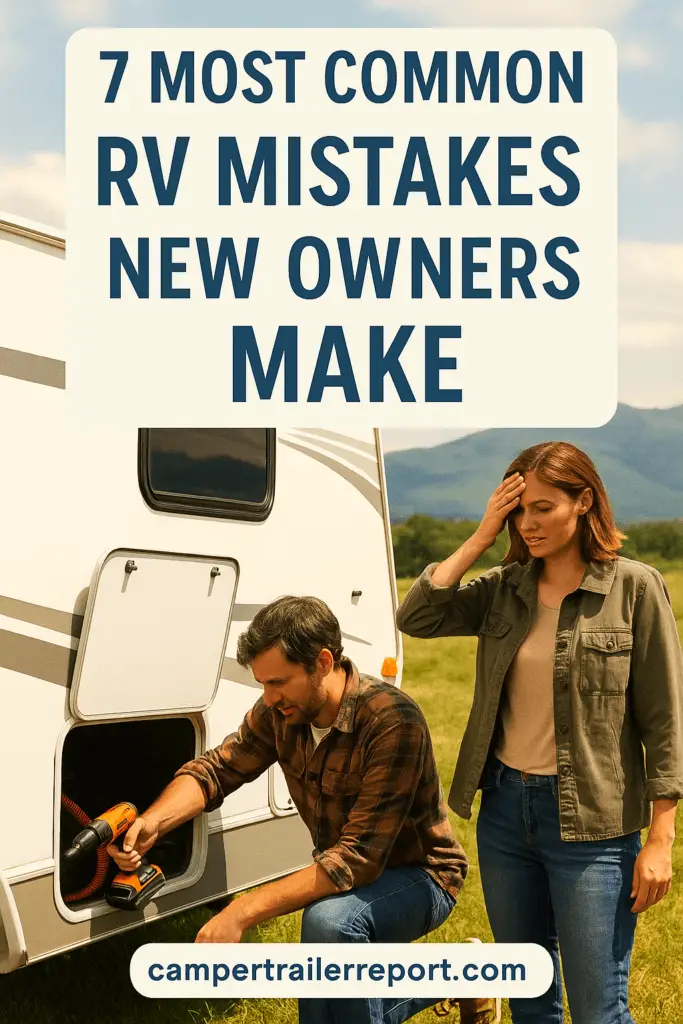
5. Hooking Up Water Without a Pressure Regulator
Many new RVers don’t realize campground water pressure is unpredictable.
What Goes Wrong
High pressure can burst internal plumbing lines — causing leaks inside walls, floors, cabinets, or insulation.
How to Avoid It
Always use a water pressure regulator.
Use a drinking-safe hose.
Add a water filter if camping often.
This simple $10–$20 tool protects your entire RV plumbing system.
6. Rushing the Setup or Breakdown Process
Excitement or fatigue makes new RVers rush — and mistakes happen.
What Goes Wrong
Leaving antennas up, forgetting to lock the fridge, unsecured cabinets, driving away while plugged in, and slide-outs hitting trees or tables.
How to Avoid It
Use simple checklists.
Setup Checklist
Level the RV.
Chock wheels.
Connect power.
Connect water + regulator.
Turn on fridge.
Confirm slide-out clearance.
Departure Checklist
Retract slides.
Secure cabinets.
Disconnect utilities.
Raise stabilizers.
Do a full walk-around.
Consistent routines prevent costly errors.
7. Not Practicing Towing or Backing Up
Towing is a totally new skill — and assuming it will feel natural is a big mistake.
What Goes Wrong
Jackknifing, hitting posts or trees, misjudging turning radius, swaying, and panic while backing up.
How to Avoid It
Practice in an empty parking lot.
Use cones to simulate campsites.
Turn wider than you expect.
Go slow.
Add sway control or a weight distribution hitch.
Read our full guide: How to Tow a Camper Trailer Safely (2026 Ultimate Guide)
Even 30 minutes of practice builds confidence.
BONUS: Not Understanding Campground Etiquette
This isn’t mechanical, but it matters.
Common Beginner Slip-Ups
Walking through someone’s campsite.
Running generators too early or late.
Leaving lights on at night.
Cutting between RVs.
Playing loud music.
Good etiquette makes you a welcome neighbor.
Extra Tips for First-Time RV Owners
Bring Backup Gear
Extra fuses, water filters, spare hoses, a full tool kit, tire repair kit, and even duct tape and zip ties.
Know Your RV Height
Write it on a dashboard sticker to avoid hitting low bridges or gas station overhangs.
Don’t Rely on Your Phone for Navigation
Use RV-safe GPS apps to avoid low clearances or restricted roads.
Practice Using Your Tank System
Learn black vs gray tank.
Remember sensors often read incorrectly (this is normal).
Always use plenty of water when flushing.
Dump gray after black to rinse the hose.
See our RV Winterizing Checklist for tank care during cold weather.
Final Takeaway
Every RVer makes mistakes at first — it’s part of the adventure. The key is learning from others so you don’t repeat the most common (and most expensive) errors.
By understanding weight limits, checking tire pressure, leveling properly, managing batteries, and using a water pressure regulator, your trips will be smoother, safer, and far more enjoyable.
With the right habits and a little practice, you’ll feel confident behind the wheel, avoid costly repairs, and get the most out of your RV adventures.
When you’re ready for new destinations, check out our list of Waterfront RV Campgrounds You Need to See for inspiration.
FAQ: Common RV Mistakes (New Owner Edition)
1. How many internal links should I use in an RV article?
For SEO, use 5–8 internal links for a 1,500–2,000-word article.
2. How often should I check RV tire pressure?
Every travel day — and before every trip.
3. What PSI should my RV tires be?
Use the tire manufacturer’s PSI chart, not the RV sticker.
4. Do I need a water pressure regulator at every campground?
Yes — many campgrounds exceed safe pressure limits.
5. How level does an RV need to be?
Level enough that the fridge stays safe and water drains properly.
6. Do RV batteries charge while driving?
Yes, but slowly. Solar or shore power charges much faster.
7. How do I avoid sway while towing?
Distribute weight evenly and use sway control or a weight distribution hitch.

![Buying a Used RV: Everything You Need to Know. [Updated for 2023]](https://cdn-0.campertrailerreport.com/wp-content/uploads/2018/02/Buying-a-Used-RV-720x360.jpg "Buying a Used RV: Everything You Need to Know. [Updated for 2023]")