Every RV owner knows that proper maintenance is the secret to stress-free travel. Whether you drive a motorhome, pull a travel trailer, or live full-time in a fifth wheel, sticking to a regular maintenance schedule will save you money, prevent breakdowns, and extend the life of your RV.
Neglecting even small tasks — like checking seals or monitoring tire pressure — can lead to expensive repairs and ruined trips. Roof leaks, failing slide-outs, dead batteries, and tire blowouts are among the most common issues RV owners face, and many of them can be prevented with routine maintenance. If you haven’t already, take a look at the article “How to Choose the Right Camper Trailer for Your Needs — 2026 Ultimate Guide” for advice on matching maintenance expectations to trailer type.
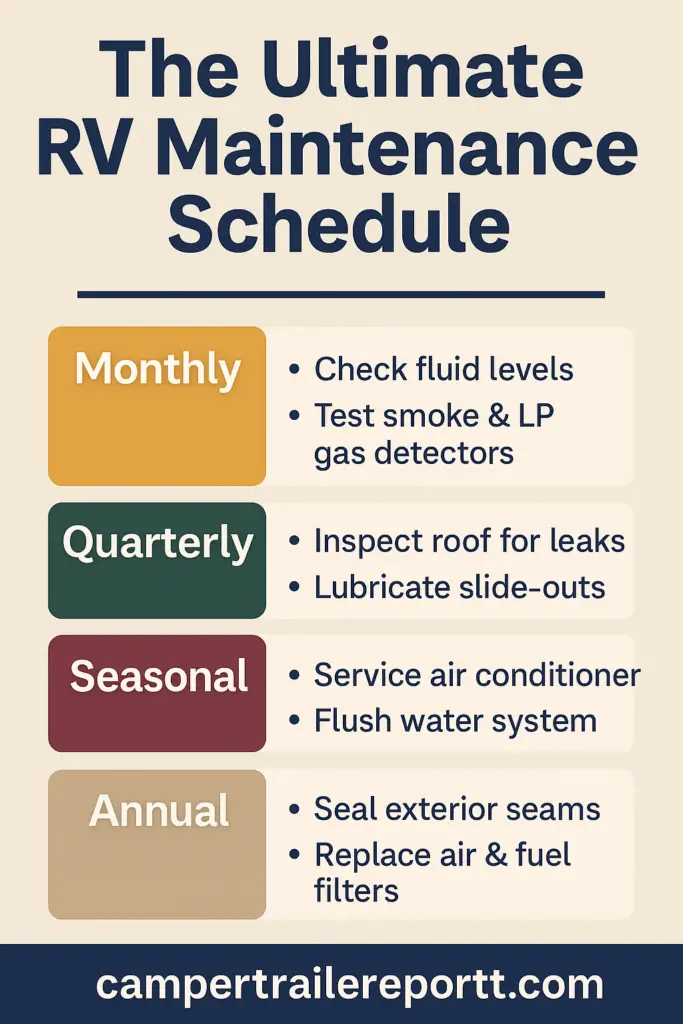
This guide gives you the complete RV maintenance schedule, divided into monthly, quarterly, seasonal, and annual tasks. You’ll also find an easy-to-follow checklist to keep your RV safe, reliable, and road-ready.
Why an RV Maintenance Schedule Matters
RVs combine the complexity of a house with the mechanics of a vehicle. That means more systems to monitor and more things that can go wrong — unless you stay ahead of them.
A good maintenance plan helps you:
- Prevent leaks and water damage
- Reduce repair costs
- Keep appliances running efficiently
- Improve safety on the road
- Avoid breakdowns during trips
- Increase the resale value of your RV
Most RV failures are preventable with routine checks, and this guide walks you through each one.
Monthly RV Maintenance Checklist
These simple tasks are essential for keeping your RV in good condition, especially if you use it regularly.
Check Tire Pressure
Low tire pressure is the #1 cause of RV blowouts. Check every trip before and once a month in storage. For more tire safety, see “How to Tow a Camper Trailer Safely.”
Inspect Roof & Seals
Look for cracks, gaps, soft spots, and loose sealant — even tiny openings allow water in. Periodic roof inspection ties into seasonal checks that help prevent bigger issues over time.
Test All Safety Devices
Test smoke alarms, CO-detectors, propane leak detectors, and fire extinguishers. Replace batteries as needed.
Run the Generator
Generators should run under load for 30 minutes each month to prevent fuel system issues.
Check Battery Water Level (Lead-Acid Only)
Add distilled water if needed. Lithium batteries don’t require this step. Look into solar + battery setups for easier maintenance.
Lubricate Hinges and Locks
Doors, storage compartments, steps, and slide mechanisms all benefit from a quick lube.
Flush the Toilet Seal
Keeps the seal lubricated and prevents odor leakage.
Follow the tire checks in your RV Maintenance Schedule.
Quarterly RV Maintenance Checklist
Every three months, complete these tasks for reliable performance.
Deep Clean the A/C Filters
Dirty filters strain the air conditioner and reduce cooling efficiency.
Clean the Water Heater Screen
Hard water deposits and insects often clog the intake screen.
Test the Slide-Outs
Look for odd sounds, jerky motion, and seal wear. Lubricate seals with slide seal conditioner. Regular slide-out maintenance helps avoid serious wear and tear and ensures smooth operation year-round.
Examine the Propane System
Check for rust, loose fittings, and leaks (use soapy water around connections). If you smell propane, shut off all valves immediately.
Open and Exercise All Valves
Gray tank, black tank, freshwater drain, bypass valves — moving them occasionally prevents sticking.
Inspect the Awning Fabric
Look for tears, mold, and loose screws. Clean and treat the awning to extend its life and avoid mildew or cracks.
Read More: RV Roof: Everything You Need to Know
Seasonal RV Maintenance Checklist
Do these tasks twice per year — typically during spring dewinterizing and fall prep.
Spring Maintenance (Dewinterizing)
- Flush the freshwater system to remove antifreeze — run all faucets until water runs clear
- Sanitize the freshwater tank using bleach or an RV-safe sanitizer
- Refill and recharge batteries; check voltage and clean terminals
- If you camp off-grid often, consider solar + battery upgrades
- Inspect tires for cracking or age; replace tires over 5 years old even if tread looks good — tire failure is a frequent RV breakdown cause
- Test all appliances (furnace, water heater, stove burners, fridge, microwave); fix any issues before summer trips start
- Inspect roof sealing and reapply lap sealant where needed to prevent water intrusion
- Clean and treat awning to prevent mildew and wear
Fall Maintenance (Before Winter Storage)
- Winterize the plumbing system: drain tanks, bypass the water heater, and add RV-safe antifreeze if storing through freezing temperatures. For a comprehensive winterizing process, refer to our “The Complete RV Winterizing Checklist”.
- Clean the refrigerator thoroughly and leave doors open to prevent mold and odors during storage
- Remove or disconnect lead-acid batteries and store indoors for winter
- Cover tires — UV rays can damage rubber even in storage
- Clean and protect the exterior (wash + wax) to prevent oxidation and sun damage
- Check for rodent entry points (seals, vents, gaps) and seal openings with steel wool or expanding foam
Read More: How to Prevent RV Slide-Out Problems.
Annual RV Maintenance Checklist
These once-a-year tasks keep your RV running smoothly long-term.
Service the Wheel Bearings
Essential for travel trailers and fifth wheels — repack or replace bearings as needed to ensure safe towing.
Check the Brake System
Inspect brake pads, rotors, brake controller, and emergency breakaway cable. Crucial for safe stopping, especially under load.
Inspect Suspension Components
Check for bent leaf springs, worn shackles, loose bolts, cracked bushings — any compromised suspension part affects ride quality and safety.
Clean and Inspect the Roof Thoroughly
Look for cracks, delamination, or loose sealant. Roof damage is one of the top causes for costly RV repairs — ongoing roof maintenance is vital for long-term reliability.
Flush the Water Heater Tank
Use a water heater wand to remove sediment buildup that can impair performance or shorten tank life.
Replace the Anode Rod (If Equipped)
Anode rods help prevent tank corrosion, extending water heater lifespan.
Service the Generator
Change the oil, replace the air filter, install new spark plugs, and clean the fuel system — neglecting the generator often leads to unexpected breakdowns.
Test Propane Pressures (Certified Technician Recommended)
Have the propane system professionally inspected annually to ensure safe operation.
Check for Delamination on Exterior Walls
Inspect for bubbles or waves, which are signs of structural issues.
Inspect All Seams
Roof seams, window frames, door seams, corners, and exterior lights — reseal as needed to prevent leaks.
Replace Wiper Blades (Motorhomes)
Replace annually — good visibility is essential for safe driving.
Examine Battery Condition
Load-test batteries and check terminals for corrosion; replace or service as needed.
Engine & Chassis Maintenance (Motorhomes Only)
Motorhomes require additional mileage-based service:
Every 5,000–7,500 Miles
- Oil change
- Replace engine air filter
- Check belts and hoses
- Inspect brakes
- Rotate tires
These checks are essential for engine health and safe road performance.
Final Takeaway
An RV maintenance schedule might look long, but most tasks take only a few minutes — and they save you from breakdowns, leaks, and expensive repairs.
By staying ahead of tire checks, sealing issues, batteries, roof inspections, and seasonal prep, your RV stays safe, reliable, and road-ready.
When you’re ready to plan your next trip, check out our list of top destinations in “Waterfront RV Campgrounds You Need to See ”.